Why Is Data Analytics Important to Businesses? 10 Key Benefits
If you walk into the office of any business in the modern world, you’re almost bound to see data around. Sales figures, complaints, website visits, inventory levels, staff hours – you name it. In very rare cases any of these figures hold immediate value by themselves – the mere fact that a spreadsheet with this information exists on a shelf in the office is a liability at worst, an asset at best. The moment a person engages with a spreadsheet and asks it a question and listens to the answer is when information transforms into value.
Table of Contents
And that’s why data analytics is valuable – because it enables the former and facilitates the latter. The sheer existence of data is no longer a point of differentiation, since any appreciable-sized business has that. It’s the effective use of that data which often confers competitive advantages and is reflected in better business decisions. Here’s why businesses stand to gain from data analytics, in 10 key areas.
Enables Better, Faster Decisions
The most obvious reason why data analytics is important fits under this umbrella term, with the elaboration coming later. A better business decision underpins almost everything that follows. A decision underpinned by hard evidence or a thorough evaluation is almost always going to be a better one than a snap shot in the dark, even if it involves a significant factor of guesswork anyway. A manager weighing up the decision to enter a particular foreign market can make a much more informed choice based on figures about the region’s demand for their product, as opposed to going purely on intuition.
2. Enables Better Understanding of the Customers
It is common for businesses to assume they know quite a bit about their customers – and data analytics routinely proves that they don’t know nearly as much as they think they do. Purchase analytics, behavioral analytics and the mere analysis of what products are bought together usually highlights numerous areas where the assumed knowledge of the customer base is at odds with reality.
It is not unheard of for businesses to realize, with a mixture of surprise and consternation, that their most consistent buyers are not the group of people they assumed purchased from them – young cosmopolitan professionals in their late twenties, perhaps, but with a significant minority of middle-aged suburban moms buying the same product on a regular basis. This frequently informs business decisions from marketing to product development.
3. Identifies Issues Before They Escalate
The combination of a slight drop in customer satisfaction, rising return rates and increased employee turnover does not seem particularly worrying on its own on any given day – when viewed from the perspective of someone who tracks these figures on a month-to-month basis, however, it is an early warning sign of deeper issues. Another benefit of the ability to notice troubling trends before they become obvious to everyone is easier mitigation. At the point when an issue is apparent to all, it may have been around for a while and there may be little that can be done without large-scale business restructuring. Trends in data analytics are most useful when addressed while they are still emerging.
4. Reveals Areas of Wastage or Inefficiency
Processes which have outlived their utility often hide in the details – businesses continue to do things the hard way out of sheer inertia, without questioning why they do them in the first place. Data analytics helps identify these pain points. The inefficiency may be evident in the fact that a particular supplier’s frequent delays result in higher costs – or identifying that one particular marketing channel delivers disproportionately low value for the budget spent on it. A business will have to examine these trends in detail to reveal the root causes, as opposed to jumping to conclusions when senior management observes a problem.
5. Offers Increased Customization of the Customer Journey
As a rule of thumb, companies treat their customers as a collective body with a certain set of characteristics, as if all of them are identical in their purchasing behaviors and only buy from one business – which they aren’t. Data analytics enables businesses to differentiate between their customers on an individual basis, and tailor the customer journey to their behaviors rather than using the industry standard as a baseline. Streaming platforms offering personalized recommendations are only the most obvious example – businesses using data analytics can offer more relevant marketing, product suggestions, customer service and overall experience. This is not necessarily complicated, only informed by the details.
6. Makes Marketing Budgets More Accountable
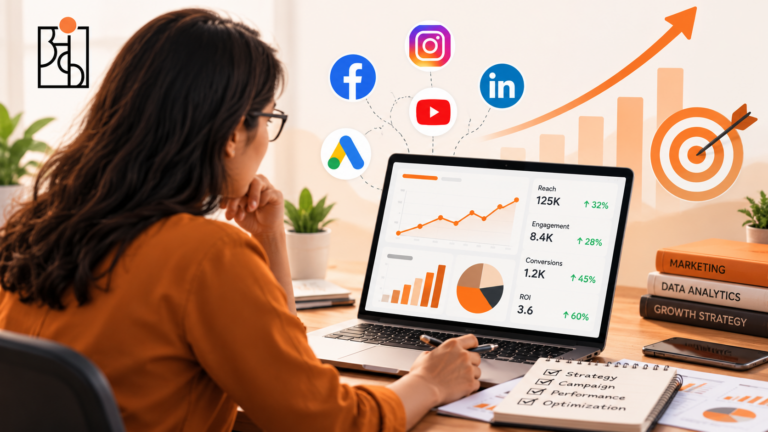
Marketing budgets are traditionally some of the most wasteful expenditures a business can make – they have long been guided by a mixture of intuition and guesswork, even if there is less of the latter with each passing year. The companies which get the best value for their money are the ones which employ data analytics to examine which options deliver the best value. What channels are responsible for the largest share of conversions? Which audiences respond most favorably to a given campaign? Which variations of a marketing asset perform demonstrably better than others? Without this level of detail, the marketing budget gets distributed in broad swipes at multiple avenues with no particular sense of direction. It also facilitates the repurposing of the marketing budget, should a particular channel or segment cease to deliver value.
7. Facilitates Better Risk Assessments
Risk is an unavoidable part of any business endeavor – whether it is a decision to onboard a new supplier, to enter a new market or to launch a product, there are potential pitfalls ahead. Data analytics does not mitigate risk, but it replaces speculation with hard evidence. A decision to offer a loan to a prospective customer has much better chances of success if it is informed by figures on that customer’s repayment capability, as opposed to a loan officer’s intuition. The same applies to virtually any other risk assessment scenario. Risk is minimized through analytics, even if it is rarely eliminated.
8. Lets You Make Better Products (And Services) Based on What People Actually Do
Traditional product development and customer service improvement processes rely on customer feedback – which is good, but is rarely as informative as one might expect. People are not always completely honest about the reasons why they do what they do, or are entirely aware of them at any given point. When it comes to what people do not do, they are rarely forthcoming in any great detail. Customer behavior analytics exposes these areas, and sometimes in quite explicit terms. If hundreds or thousands of users have abandoned the sign-up process at a certain point, the analytics will highlight it as a concern. They may not have articulate answers as to why they did so, but the fact that several thousand people have done it at a certain stage indicates that something is worth looking into.
9. Helps You Stay Competitive Against Other Businesses That Are Likely to Leverage Data Analytics Too
There is a reason why businesses which have embraced data analytics tend to outperform competitors who have not – and it goes beyond the advantages which the former tends to confer on them as a rule of thumb. It is not a matter of if, but when, two businesses which incorporate data analytics will find themselves competing against each other. It is much easier to justify the cost of a comprehensive data analytics tool, the team to operate it and the time to extract value from it when one realizes that it is, in essence, a competitive necessity at this point. It is much harder to make large-scale business decisions based on instinct and hope alone, because these instincts tend to be informed by experience, which is frequently outdated. Businesses which incorporate data analytics tend to make better decisions on average, and therefore tend to be more successful overall.
10. Encourages a Healthy Skepticism Toward Business Decisions and Assumptions, Including One’s Own
This point is similar to the previous one, but it highlights a different mechanism by which businesses incorporate data analytics to see results. Data analytics cultivates a culture within an organization in which people are encouraged to question the status quo, to doubt decisions and assumptions which have been made, including one’s own, in the past. It is not an easy process and it is not immediate – it takes time for people to grow comfortable with asking difficult questions, and for managers to reward this behavior in subordinates, rather than punishing it out of misplaced loyalty to past decisions. In the long run, businesses which encourage such healthy skepticism tend to make fewer objectively worse decisions, and therefore tend to be more successful.
Why It Matters Beyond the Sum of Its Parts
It would be tempting to frame these benefits as a checklist, or as a way to extract value from the mere existence of a spreadsheet. The reality is that value typically takes time to manifest itself, and it does so in much more meaningful ways. A business which notices minor inefficiencies and waste and eliminates them tends to become much more successful in the long run, as opposed to one which cherry-picks easily apparent benefits from embracing data analytics. These ten points elaborate on why such successes are worth pursuing. They are the reasons why businesses should care about data analytics. This is the core message which Ankashram conveys to businesses – the benefits, and how they come about. However, it is important to build on this foundation and explain why this particular approach offers the best value. The businesses which benefit from data analytics are the ones which adopt it as a mindset, as opposed to viewing it as an end in itself. The skill encapsulated by Ankashram is valuable to almost any business which wishes to take advantage of the opportunities which data analytics offers, or is better at identifying them as an opportunity for competitive differentiation.
Frequently Asked Questions
Q1.Why is data analytics important for small businesses, not just large corporations?
Small businesses often have less room for error, which makes data analytics arguably more valuable, not less. A smaller marketing budget wasted on the wrong channel, or a wrong inventory bet, hurts a small business far more than it hurts a large one with deeper reserves to absorb mistakes.
Q2.What’s the biggest benefit of data analytics for most businesses?
It varies by business, but better decision-making tends to be the foundation everything else builds on. Cost savings, customer personalization, and risk management all depend on decisions actually being grounded in evidence rather than assumption.
Q3.Do you need a large team to benefit from data analytics?
No. Even a small business tracking a handful of key metrics consistently and reviewing them regularly gets real value. The habit of actually looking at the numbers matters more than the size of the team doing the looking.
Q4.How does data analytics help with customer retention specifically?
It reveals patterns in behavior that predict when a customer is likely to leave — a drop in usage, a support complaint, a missed renewal — early enough that a business can actually act before the customer is gone, rather than finding out only after they’ve already left.
Q5.Is data analytics only useful for digital businesses?
No. Any business generating sales data, customer interactions, or operational records can benefit, whether that’s a retail store tracking foot traffic and purchases or a manufacturing company tracking production efficiency and defect rates.
Q6.How does Ankashram help businesses build these habits?
Ankashram focuses on building the underlying thinking skill — asking sharper questions, trusting evidence over instinct when they conflict, knowing when a number actually supports a decision versus when it just looks convincing — rather than only teaching specific tools, since that habit is what actually makes data analytics valuable in the long run.